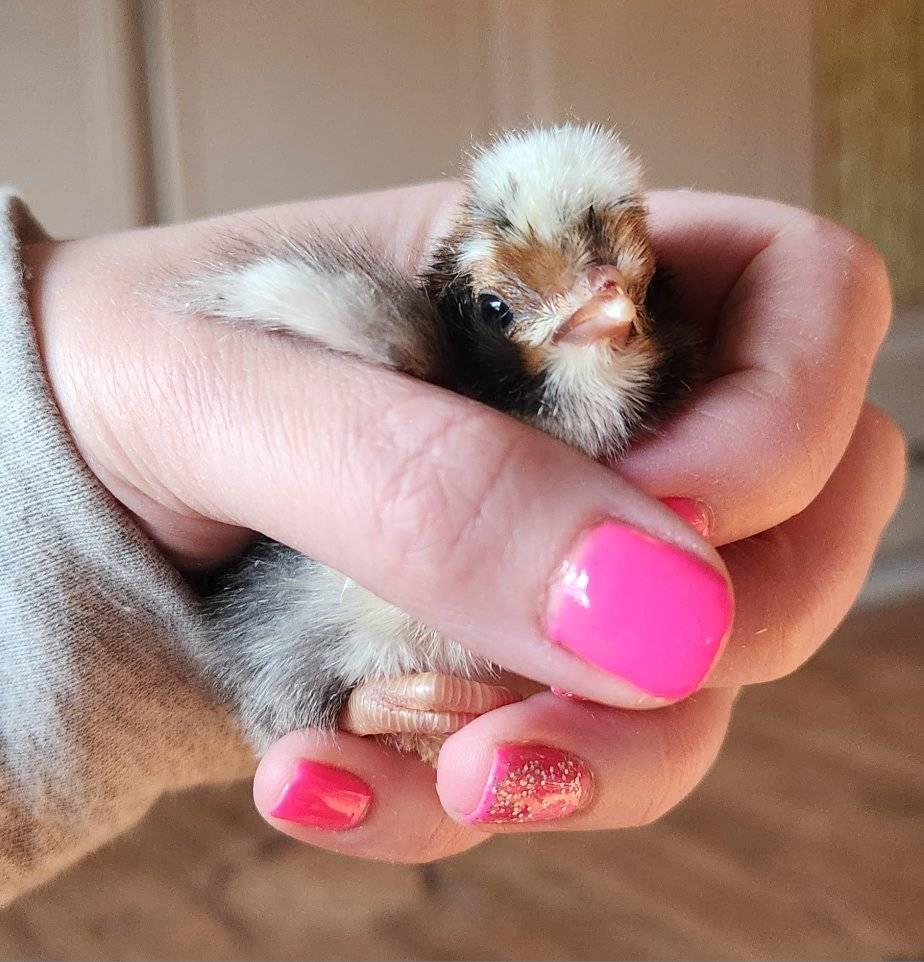
Incubating eggs is exciting and rewarding. I recommend you try it at least once. It’s an incredible feeling to see your first baby chick hatch!
We will walk you through step by step on how to incubate your own eggs to add to your backyard flock.
Prior to incubating chicken eggs
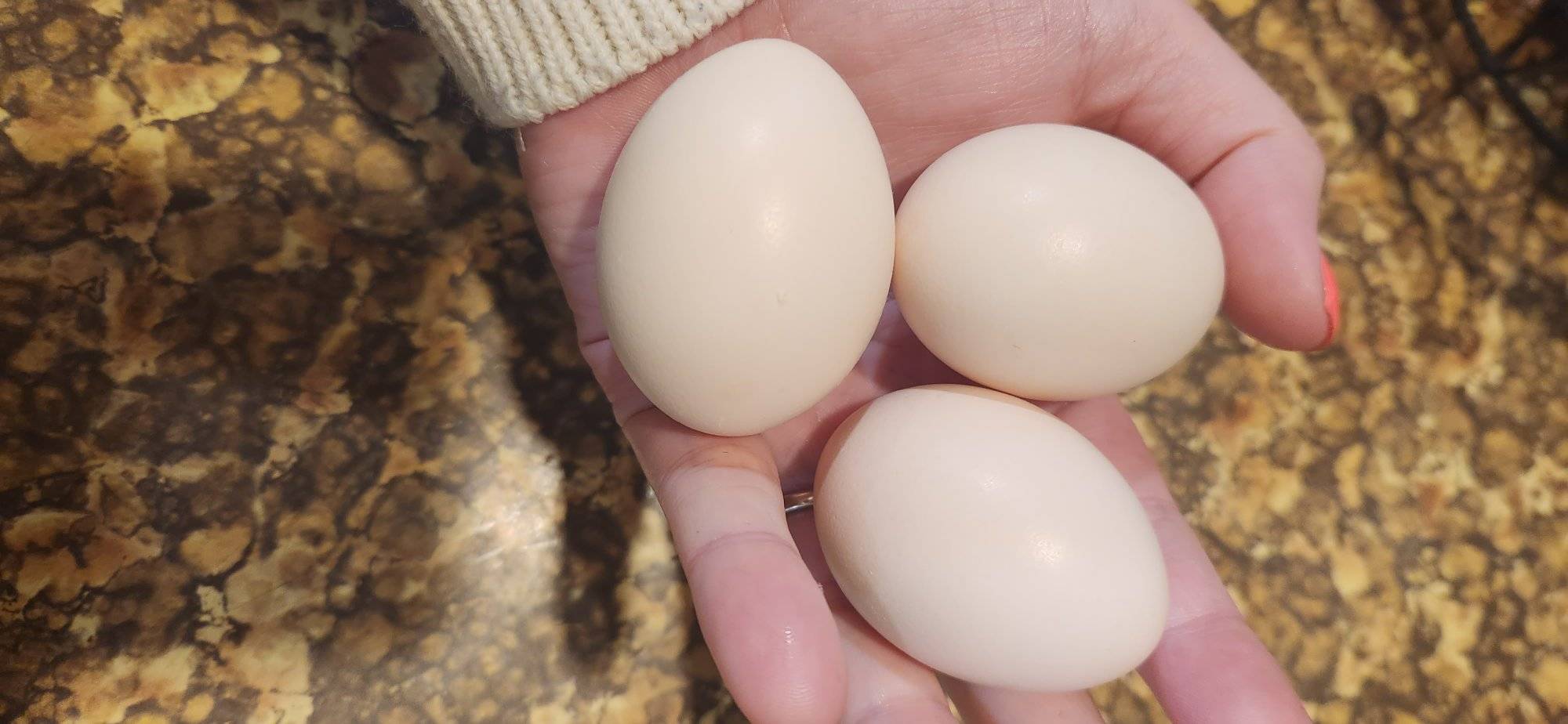
For hatching to occur, the eggs must be fertile. Fertile eggs can be collected from hens who are housed with a rooster.
Prior to incubation, a fertilized egg can be stored for a maximum of 7 days in a cool room kept at a steady 55-60 degrees Fahrenheit (not in the refrigerator – it’s too cold!). Once the fertilized eggs are placed in the warm incubator, they may develop over the course of 21 days, with the proper incubator set-up and care.
Before your baby chicks hatch, be sure to have your brooder setup along with medicated chick feed. Check our category on “caring for chicks” on how we setup our brooder for an example.
How to set up the egg incubator
Fertile eggs can be hatched by using an egg incubator. An incubator is an enclosed structure with a fan and heater to keep eggs warm during the 21-day incubation period. When determining which incubator to purchase, we recommend using an incubator with some automatic features, such as egg turning (which is critical to chick development and to keep the chick from sticking to the inside surface of the shell) and a fan to facilitate even heat distribution.
Location is important! Locate your incubator in a room that maintains a constant temperature, is free from drafts, and away from windows and direct sunlight. Also, make sure that your incubator is located where children and pets will not bump or disturb it during the 21 day incubation period.
Prepare the incubator in advance by having the temperature set as well as the humidity at the right levels. There will be instructions included with whichever incubator you choose to buy. Personally this is the incubator we prefer and have been very successful.
MATICOOPX 30 Egg Incubator with Humidity Display, Egg Candler, Automatic Egg Turner, for Hatching Chickens
You can find it here: https://amzn.to/48mJj95
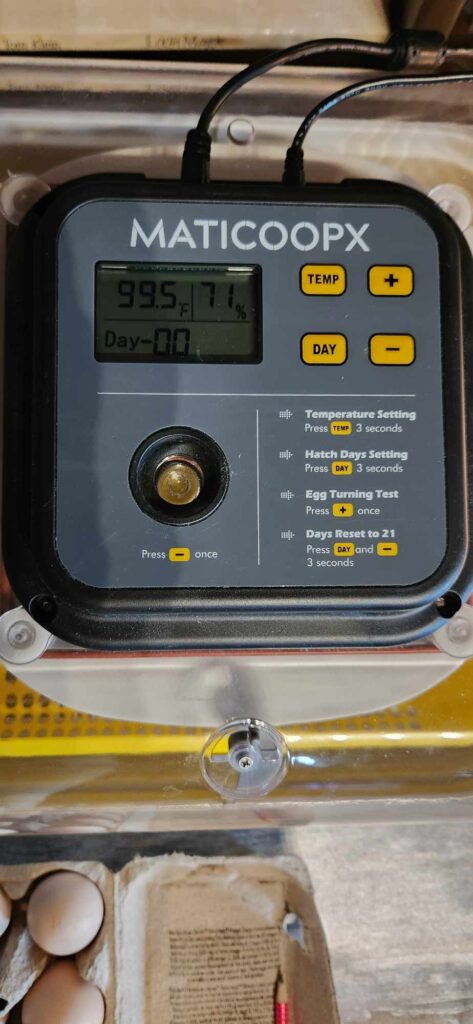
Day 1: Setting eggs
Once you have the incubator set-up and have analyzed the settings to ensure accuracy, you are ready to place the eggs inside the incubator. This process is called “setting the eggs.”
Plan to set a minimum of six eggs at one time. Setting fewer eggs, especially if the eggs were shipped, often results in one or no hatchlings. The number of chicks that hatch together is especially important for the newborn chicks because chickens are flock animals and need companions to be happy. Place the eggs in the egg tray of the incubator, with the larger end facing up and the narrow end facing down in the incubator.
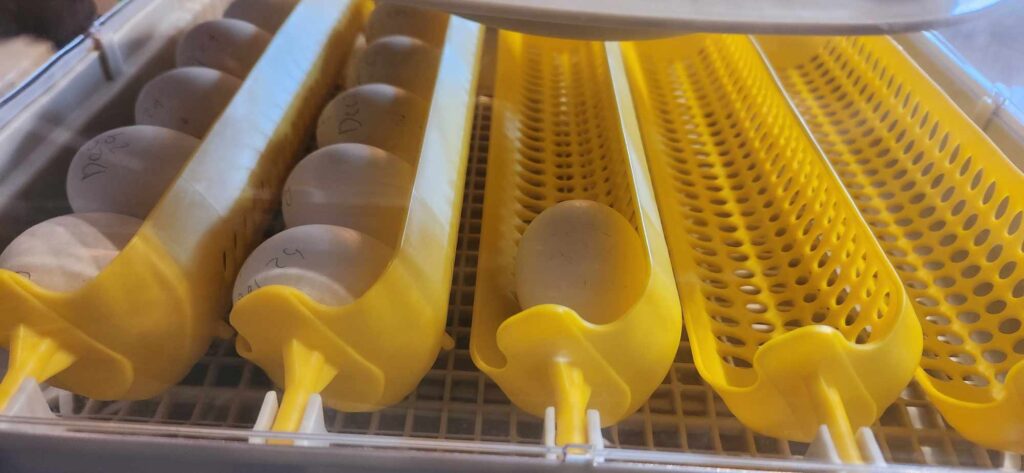
Day 1-18: Turning the eggs
After setting the eggs, the incubation process begins. An important part of this process is turning, or rotating, the eggs.
Eggs must be physically turned to prevent the developing chick from sticking to the shell. More scientifically, the embryo should be resting on top of the yolk. The yolk tends to float upward, on top of the albumen (egg white) towards the shell if the egg is not turned. As a result, the developing embryo can be squeezed between the yolk and the shell, causing potentially fatal damage. By turning the eggs, the yolk turns within the albumin, once again moving the yolk away from the shell and making it safe for the embryo on top until it is time to turn again.
Eggs will need to be turned a minimum of 3 times per day, and 5 times is even better. If you are turning the eggs manually, it is advised to gently make a mark with a pencil (never a pen!) that will help you keep track of which eggs have been turned. If you have an automatic incubator, (The MATICOOPX we use automatically turns them) it should turn the eggs for you and will eliminate the need to repeatedly open the incubator
Be sure to wash your hands you touch the eggs to prevent the transfer of skin oils or germs to the developing chick, I suggest the same for handling the baby chicks afterwards.
Days 5-7: Candling eggs
Towards the middle of the incubation period at 5 to 7 days, eggs can be candled to determine if the embryos are growing properly.
Candling is the act of shining a light through an egg. White and light-colored shells are the easiest to candle, while darker shells will require a brighter light. The simplest way to candle an egg is with a basic flashlight, but there are specialized pieces of equipment designed specifically for the job. Most incubators will have a candling option included with it. Do not keep the egg out of the incubator for more than 5-10 minutes, and don’t candle the eggs all at once. To allow the eggs to stay inside the incubator, plan to candle a few at a time.
If you notice broken or leaking eggs, remove them from the incubator as they are not likely to be viable and may contaminate the incubator. After candling, return eggs to the incubator and return to the day 1-18 turning schedule.
Day 21: Baby chicks start hatching
Chicks will typically hatch at day 21. If the fertilized eggs were cooled prior to incubation, the process might take a little longer. If you are at day 21 with no hatch, give the eggs a few more days.
When the big day comes, let the chick hatch on its own. Do not attempt to help. Blood vessels that haven’t dried up yet may still attach the shell to the chick, and prematurely pulling of the shell can cause excessive, potentially fatal, bleeding. A chick can take up to 24 hours to completely hatch.
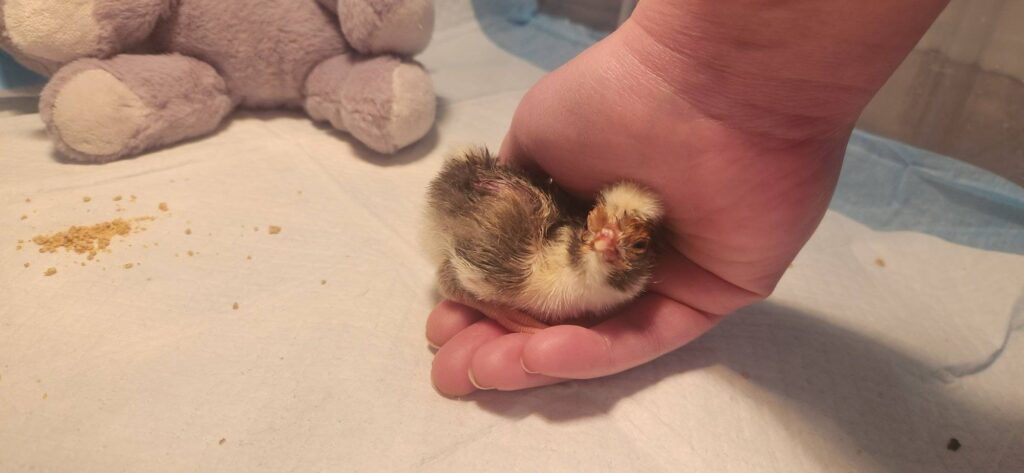
The peeping of the new baby chicks will encourage unhatched eggs to also start hatching. Once the chicks have dried, they can be moved into the brooder, which should already be up and running with a temperature of 90-95o Fahrenheit. Food and water should be in place as well.
If there are still unhatched eggs at day 21, don’t despair. It is possible that timing or temperature went slightly awry, so give the eggs until Day 23. Candle any unhatched eggs to see if they are still alive before discarding them.
Final Conclusion:
After all chicks have hatched and are moved into the brooder, make sure to thoroughly clean and disinfect the incubator and all parts following the manufacturer’s directions. A 1:10 bleach/water solution is ideal for sanitizing.
Happy hatching!